(1).png "PowerHome.com")
When choosing a backup power solution, many buyers hesitate between an inverter generator and a conventional generator. At first glance, both machines look similar—they run on fuel, use an engine, and generate electricity. However, the way they produce and regulate power is fundamentally different, and that difference affects noise level, fuel efficiency, power quality, and long-term usability.
If you are planning for home backup, RV travel, outdoor activities, or job site applications, understanding these distinctions will help you choose the right system instead of simply selecting the cheaper or more powerful option.
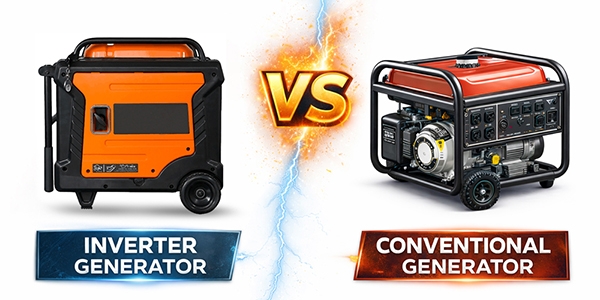
How Inverter/Conventional Generate Power
A conventional generator produces electricity directly from its alternator. The engine runs at a constant speed, typically 3600 RPM, to maintain a stable 60Hz output. Because the engine speed never changes, the generator continuously consumes fuel at the same rate regardless of the actual load demand. The output power is usable and reliable for most appliances and tools, but it is considered “raw” power, meaning it may contain higher harmonic distortion.
An inverter generator, on the other hand, uses advanced electronic circuitry to refine the electricity before it reaches your devices. It first produces high-frequency AC power, converts it to DC, and then inverts it back into clean, stable AC output. This additional processing results in a pure sine wave with very low total harmonic distortion. At the same time, inverter generators automatically adjust engine speed based on real-time power demand, allowing them to run more efficiently.
This difference in power regulation is what separates modern inverter technology from traditional generator design.
Power Quality and Electronics Safety
One of the most important factors to consider is the type of equipment you plan to power.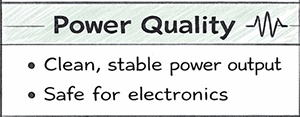
Conventional generators are perfectly suitable for heavy-duty tools, refrigerators, pumps, and heating systems. However, because their output may fluctuate slightly and contain higher harmonic distortion, sensitive electronics such as laptops, televisions, gaming systems, medical equipment, and smart home devices may be at risk if protection circuits are not present.
Inverter generators produce clean, stable electricity comparable to utility grid power. For anyone who plans to power computers, routers, CPAP machines, or other delicate electronics, inverter generators provide a safer and more reliable solution.
Fuel Efficiency and Operating Cost
Fuel consumption is another major difference between the two types.
Because conventional generators operate at constant speed, they burn fuel at the same rate whether powering a small phone charger or multiple appliances. Over extended outages, this can result in significant fuel usage.
Inverter generators adjust engine speed automatically. When demand is low, the engine slows down, reducing fuel consumption and extending runtime. This makes inverter generators especially attractive for camping trips, overnight use, or situations where fuel availability may be limited.
Although inverter generators typically cost more upfront, their improved efficiency can reduce long-term operating costs.
Noise Level and User Comfort
Noise is often the deciding factor for residential and recreational users.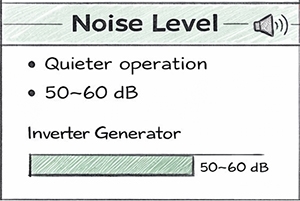
Conventional generators tend to be louder due to their constant high-speed operation and open-frame design. They are well suited for construction sites and outdoor work environments where noise is not a primary concern.
Inverter generators are designed with sound-dampening enclosures and variable-speed engines. Because they slow down under lighter loads, they operate significantly more quietly. For RV parks, tailgating events, or suburban neighborhoods, this quieter performance makes a noticeable difference in comfort and compliance with noise restrictions.
Which Generator Is Better for Home Backup?
For home backup during power outages, the right choice depends on your energy needs.
If you plan to power essential devices such as refrigerators, lighting, Wi-Fi routers, and phone chargers, an inverter generator provides clean, quiet, and fuel-efficient operation.
If you need to run large appliances like HVAC systems or multiple high-wattage devices simultaneously, a conventional generator may deliver the higher output required.
Many homeowners choose based on a balance between wattage requirements, budget, and acceptable noise levels.
Power Capacity and Application Scope
When it comes to maximum output, conventional generators often offer higher wattage at a lower cost per watt. Large models can support whole-home backup systems, central air conditioning units, electric water heaters, and heavy industrial equipment.
Inverter generators are commonly available in smaller to mid-range capacities, making them ideal for essential home backup, recreational use, and portable applications. While high-capacity inverter models exist, they are generally more expensive.
If your primary goal is powering large loads for extended periods, a conventional generator may offer more practical capacity. If you prioritize efficiency, portability, and clean power, an inverter generator may better fit your needs.

Making the Right Choice
The decision between an inverter generator and a conventional generator ultimately depends on how and where you plan to use it.
If your priority is clean power for electronics, quiet operation, and fuel efficiency, an inverter generator represents the more advanced and user-friendly option. It is especially well suited for homeowners, RV travelers, and anyone needing stable electricity for modern devices.
If you require high wattage at a lower upfront cost and primarily power heavy-duty equipment or large appliances, a conventional generator remains a dependable and cost-effective solution.
Neither technology is universally better. Each serves a different purpose within modern backup power systems. By understanding how they differ in power regulation, efficiency, noise output, and capacity, you can confidently select the generator that matches your energy demands and operating environment.
Choosing the right generator can be complex. If you’d like expert support, reach out to Powerhome, and we’ll help you find the most reliable power solution for your application.
(1).png)


