(1).png "PowerHome.com")
AC Reactor


3 Phase AC Line Reactor, 2 HP Input


3 Phase AC Line Reactor, 2 HP Output


3 Phase AC Line Reactor, 3 HP Input


3 Phase AC Line Reactor, 3 HP Output


3 Phase AC Line Reactor, 5 HP Input


3 Phase AC Line Reactor, 5 HP Output


3 Phase AC Line Reactor, 7.5 HP Input


3 Phase AC Line Reactor, 7.5 HP Output


3 Phase AC Line Reactor, 10 HP Input


3 Phase AC Line Reactor, 10 HP Output


3 Phase AC Line Reactor, 15 HP Input


3 Phase AC Line Reactor, 15 HP Output


3 Phase AC Line Reactor, 20 HP Input


3 Phase AC Line Reactor, 20 HP Output


3 Phase AC Line Reactor, 25 HP Input


3 Phase AC Line Reactor, 25 HP Output


3 Phase AC Line Reactor, 30 HP Input


3 Phase AC Line Reactor, 30 HP Output


3 Phase AC Line Reactor, 50 HP Input


3 Phase AC Line Reactor, 50 HP Output
- 1
- 2
In modern power electronics, there is a quiet but critical component: AC reactor. Unlike inverters, which are frequently discussed, or solar panels, which draw immediate attention, the AC reactor plays an indispensable role in improving power quality, protecting key equipment, and extending system life. Whether it’s a high-speed VFD on an industrial production line or a high-end air conditioner running quietly at home, the AC reactor works behind the scenes to ensure the stability and safety of every watt of electricity.
PowerHome AC reactors are built with high-quality iron cores and pure copper windings, undergoing rigorous testing to perform reliably in complex power environments. We offer a wide range of input and output reactors, supporting 3 phase and 220V-480V systems, allowing users to quickly select the right model based on their equipment power and site requirements, with access to professional technical support.

Product Types & Selection Guide
In practice, AC reactors are mainly divided into two types based on their installation position: Input Reactors and Output Reactors, each with distinct protection roles.
Input AC Reactor is typically installed at the power input of a VFD or driver. Its primary function is to suppress harmonic interference from the grid side and effectively limit the inrush current generated when equipment is powered on, thereby protecting the rectifier bridge and capacitors from stress. It is particularly suitable for environments with low grid impedance, poor power quality, or where multiple devices operate in parallel.
Output AC Reactor is installed between the output of a VFD or driver and the motor. Its main task is to smooth high-frequency harmonics in the PWM waveform, reduce voltage spikes on the motor windings, and minimize electromagnetic interference between the cable and the motor. This is an ideal choice when the distance between the motor and VFD is long (typically over 50 meters) or when protecting older motors.
When selecting a reactor, consider the following recommendations:
- Rated Current: The reactor’s rated current should be at least equal to the rated input or output current of the load equipment to ensure long-term stable operation.
- Impedance: Common impedance values are 3%, 5%, and 7%. The higher the requirement for harmonic suppression, the higher the recommended impedance.
- Operating Environment: For installations in high-temperature, high-humidity, or dusty environments, prioritize products with a higher protection rating.
Key Advantages
Compared to standard reactors, the AC reactor offers significant advantages in performance, reliability, and user experience, effectively solving real-world power issues. First, it provides high-efficiency harmonic suppression, effectively filtering harmonic interference from both the grid and load side, improving overall power quality, and reducing harmonics' negative impact on communication and control systems. Second, the AC reactor reliably limits inrush currents and current transients, protecting critical components like rectifiers, IGBTs, and capacitors, thereby significantly reducing equipment failure rates.
In terms of construction, the AC reactor features a low-loss silicon steel core and high-temperature-rated pure copper windings, offering excellent temperature rise control for continuous long-term operation. The core is precisely processed, and the windings undergo vacuum impregnation, providing excellent vibration resistance, moisture resistance, and aging resistance. Furthermore, the AC reactor can integrate with systems to provide multiple protection functions, including overcurrent, overtemperature, and short-circuit protection, enhancing overall system safety.
Overall, the AC reactor is not only stable and long-lasting (with a design life exceeding 10 years) but also low-maintenance, making it a cost-effective power protection solution for a wide range of industrial and residential applications.
Applications
AC reactors are widely used across various fields requiring improved power quality and protection for power electronic equipment, including industrial automation, renewable energy systems, smart appliances, UPS data centers, electric mobility, and building infrastructure.
In fact, AC reactors play a quiet role in our daily lives. For example, when your high-end variable-frequency air conditioner runs stably for hours on a hot summer day, or when your refrigerator continues to work quietly and efficiently after frequent door openings, an AC reactor is likely helping to suppress current spikes and protect the compressor. Similarly, in applications demanding high power quality—such as medical equipment, laboratory instruments, or high-end audio systems—an AC reactor effectively reduces electrical interference, ensuring more accurate and reliable operation.
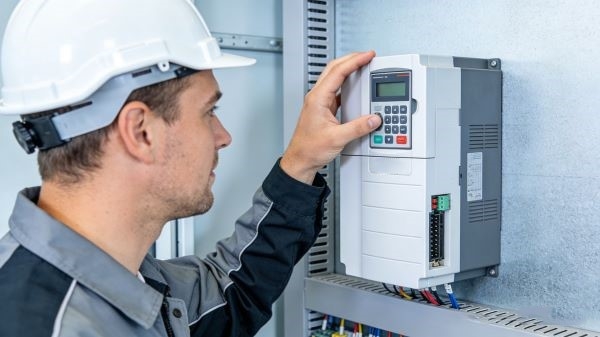
From a broader perspective, key application scenarios for AC reactors include:
- Enhancing production line stability with VFDs, servo drives, and soft starters.
- Suppressing harmonics and current spikes in photovoltaic inverters, energy storage converters, and wind power converters.
- Improving operational reliability in high-end appliances such as air conditioners, refrigerators, and washing machines.
- Ensuring power quality for critical loads in UPS systems and data centers by reducing harmonic interference.
- Providing current protection in electric vehicle charging stations and rail transit auxiliary power systems.
- Integrating into VFD-driven systems for building equipment like elevators, central air conditioners, and water pumps.
Though often unseen by end-users, the AC reactor acts as a "silent guardian" in power systems. Whether improving equipment operational stability, extending service life, or enhancing overall power quality, it plays an irreplaceable role.
At PowerHome.com, we offer a wide selection of high-value input and output AC reactors suitable for everything from household appliances to industrial equipment. All products undergo strict quality testing and come with clear installation diagrams to facilitate easy selection and safe use. Visit our online store or contact our customer service team to find the ideal AC reactor solution for your equipment. We are committed to making every customer's power experience more reliable, efficient, and worry-free.
(1).png)
Strong Power Supply, Smart Power Solutions.


